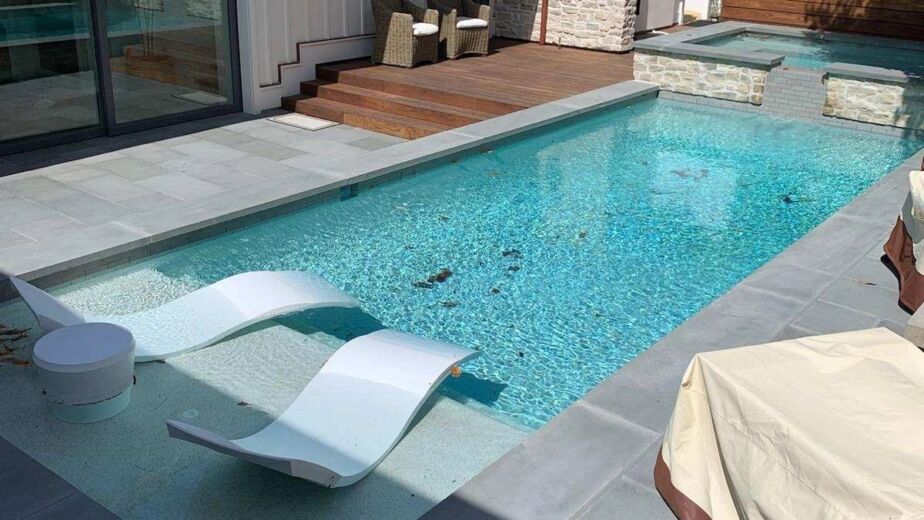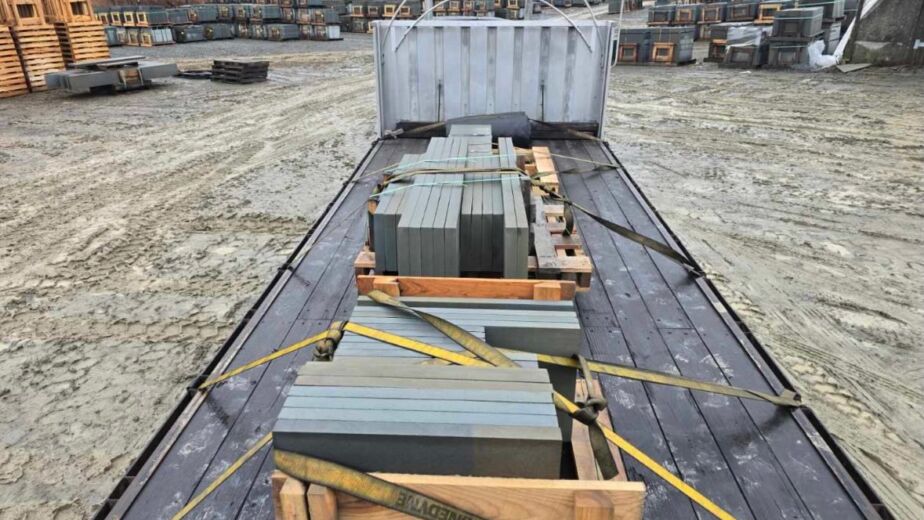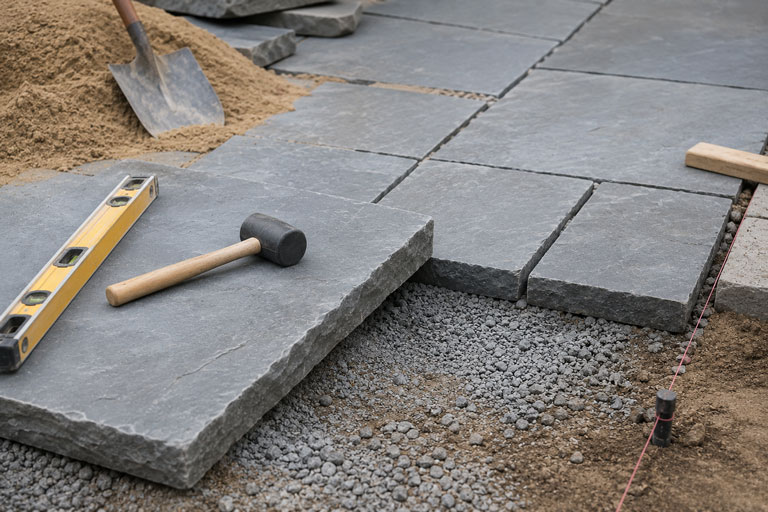
Pennsylvania bluestone is one of the most durable and beautiful natural stone products available for patios, walkways, pool decks, and outdoor living spaces. When installed correctly, it can provide decades of dependable performance with minimal maintenance.
Unfortunately, even premium natural stone can develop problems if the installation isn’t done properly. Most issues—including settling, loose stones, poor drainage, and cracked pavers—can be traced back to a handful of common installation mistakes.
Whether you’re a homeowner planning a project or a contractor looking to create lasting results, understanding these mistakes can help you build a stronger, more durable bluestone installation.
Quick Answer
Most bluestone installation problems are caused by poor base preparation, inadequate drainage, improper joint spacing, or choosing the wrong stone for the application. Careful planning and proper installation techniques help ensure your Pennsylvania bluestone patio or walkway remains beautiful and structurally sound for decades.
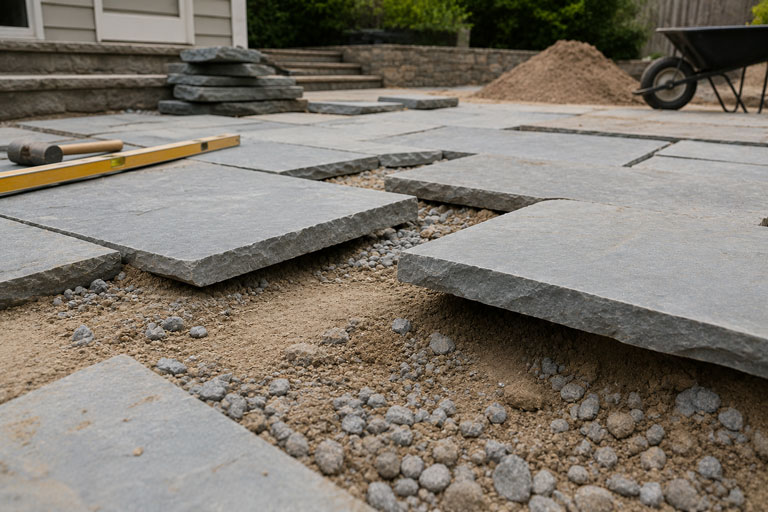
Mistake #1: Skipping Proper Base Preparation
A beautiful patio begins below the surface.
One of the most common mistakes is failing to prepare a stable, properly compacted base before laying the stone.
Without adequate support, even the highest-quality bluestone can shift, settle, or become uneven over time.
A proper foundation typically includes:
- Thorough excavation
- Compacted subsoil
- Crushed stone base
- Proper bedding material
- Multiple stages of compaction
Taking shortcuts during base preparation almost always leads to future repairs.
Mistake #2: Ignoring Drainage
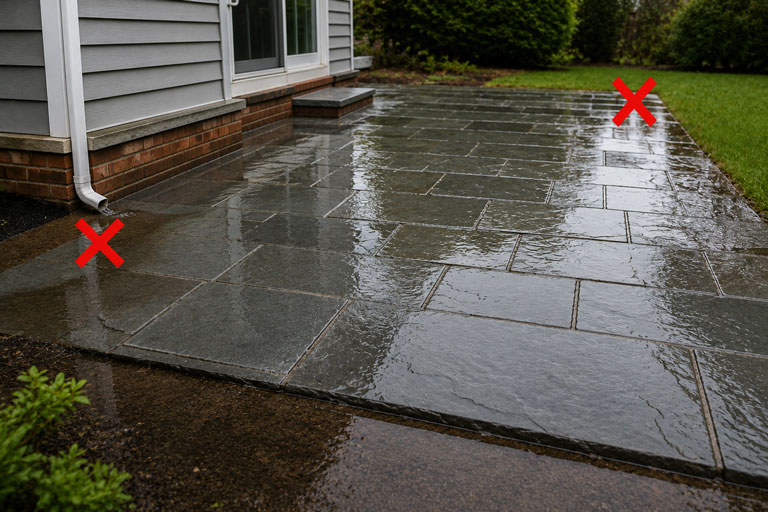
Water is one of the biggest threats to any hardscape installation.
If rainwater is allowed to collect on or beneath the patio, it can contribute to erosion, frost heaving, and uneven settling.
Every bluestone project should include a slight slope that directs water away from buildings and allows proper drainage.
Good drainage helps extend the life of both the stone and its supporting base.
Mistake #3: Choosing the Wrong Stone Thickness
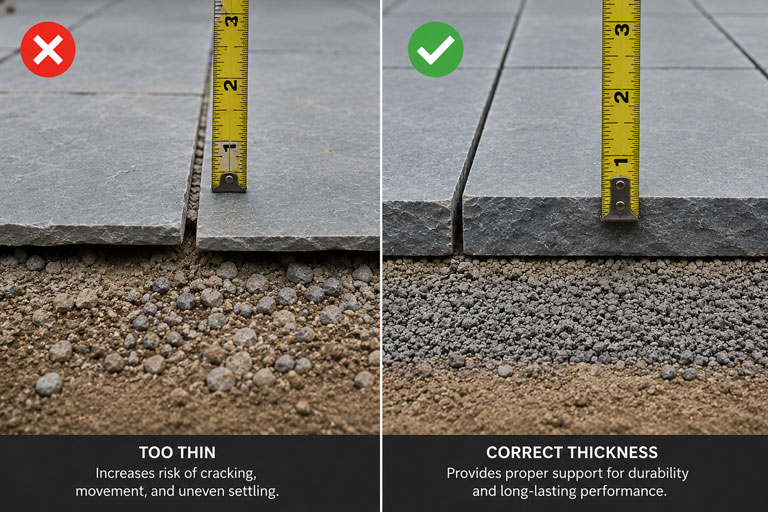
Not every bluestone project requires the same stone thickness, and selecting the wrong product can lead to unnecessary problems over time.
We produce bluestone pavers at 1″ and 1-1/2″ thick, and either thickness is suitable for either dry laying or setting in mortar. However, most installations being dry laid will opt for 1-1/2″ thickness, and most being set in mortar will opt for 1″. Pavers that are too thin for the intended application may be more susceptible to movement, cracking, or uneven settling. On the other hand, choosing a thicker product than your project requires can increase both material and installation costs without providing additional benefits.
As a general guideline:
- Patios & Walkways: 1½-inch bluestone is commonly recommended for residential installations over a properly prepared base.
- Pool Decks: 1½-inch thermal-finished bluestone is a popular option because its textured surface can provide useful outdoor traction. Performance still depends on slope, drainage, moisture, ice, algae, wear, and maintenance.
- Landscape Steps: Select Bluestone Treads or Slab Steps, along with a supporting stair assembly, that are designed for the anticipated loads and applicable local building requirements.
- Driveways & Heavy Vehicle Areas: These projects typically require thicker stone and specialized installation methods designed to support vehicle loads.
Mistake #4: Inconsistent Joint Spacing
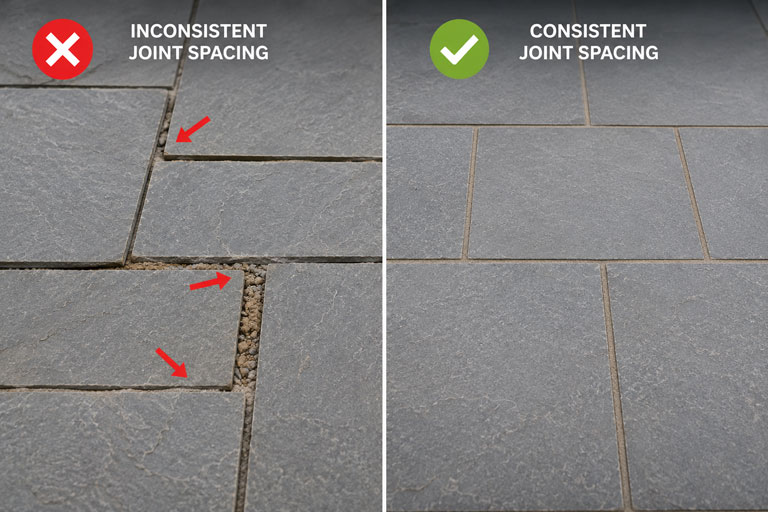
Joint width affects both appearance and durability.
Joints that are too narrow can place stress on the edges of the stone, while joints that are too wide may look uneven and allow greater movement of joint material.
For most residential bluestone patios, consistent joints between 1/8 inch and 1/4 inch provide the best balance of aesthetics and performance.
Note: Precisely cut bluestone may accommodate narrow joints, while natural-cleft or irregular pieces often require wider spacing. Maintain consistent joints wherever possible.
Mistake #5: Poor Compaction
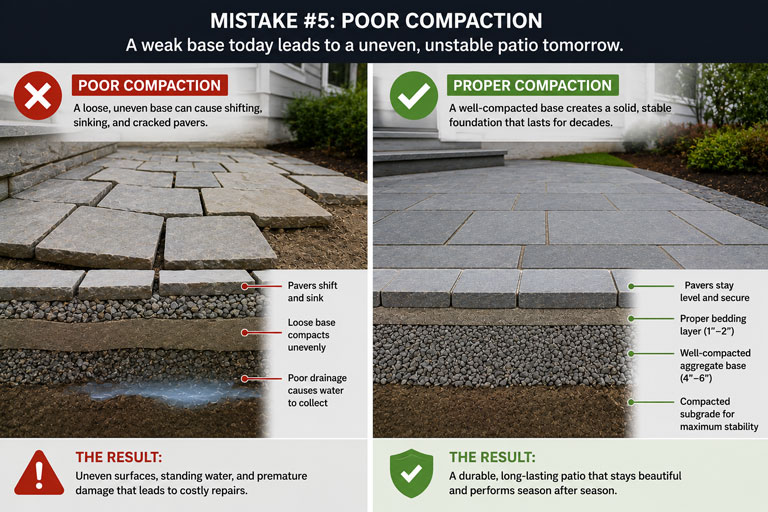
Even if the correct base material is used, insufficient compaction can lead to future settling.
Each layer of crushed stone should be compacted before adding the next.
Proper compaction creates a stable foundation that resists movement and helps maintain a level patio for years to come.
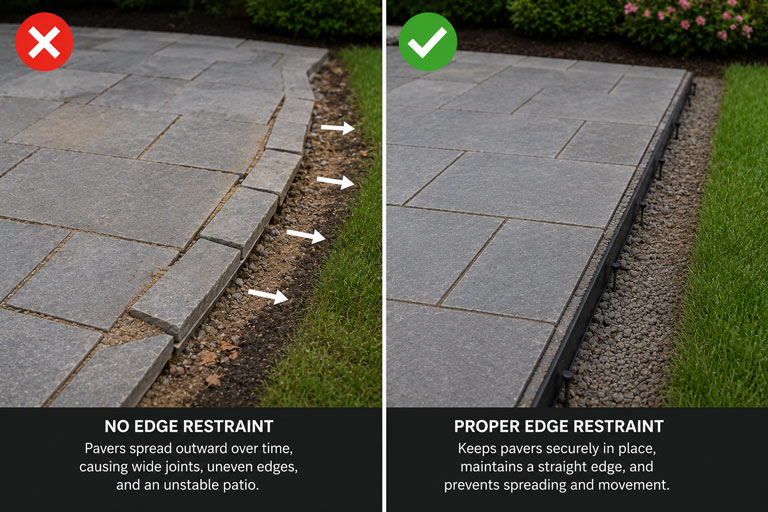
Mistake #6: Forgetting Edge Restraints
Dry-laid patios generally need a secure perimeter condition to prevent movement at exposed edges.
Depending on the design, this may be a manufactured edge restraint, concrete curb, masonry border, wall, or another properly anchored boundary.
Mortared installations use different edge and structural details, so the restraint method should match the complete installation system.
Mistake #7: Using the Wrong Joint Material
The material placed between the stones plays an important role in the stability of the installation.
For most dry-laid patios, polymeric sand is a popular choice because it helps:
- Lock stones together
- Discourage weeds
- Reduce insect activity
- Minimize erosion
Using improper joint materials can shorten the lifespan of the installation.
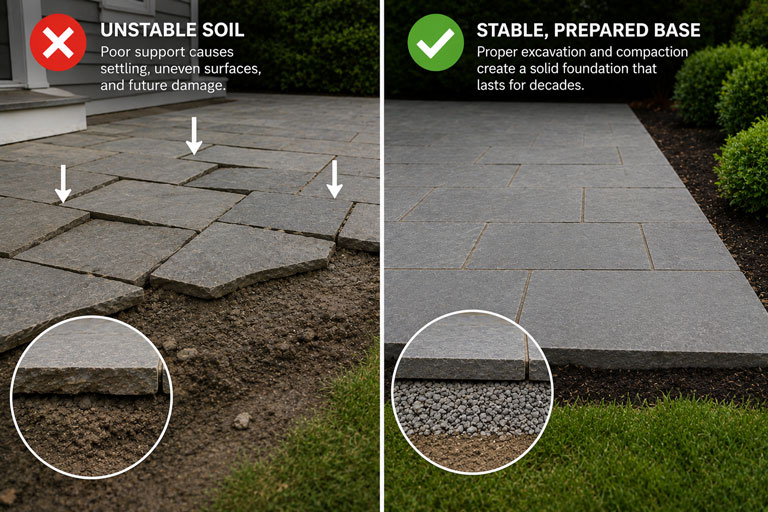
Mistake #8: Installing on Unstable Soil
Every property has unique soil conditions.
Soft or poorly compacted soil can allow patios to shift over time, regardless of the quality of the stone itself.
In some situations, additional excavation or base reinforcement may be necessary before installation begins.
Proper site evaluation is an important part of every successful project.
Mistake #9: Rushing the Installation
Natural stone rewards careful craftsmanship.
Taking the time to:
- Check level frequently
- Maintain consistent joints
- Verify drainage
- Inspect alignment
- Compact each layer properly
results in a patio that not only looks better but performs better over the long term.
Mistake #10: Neglecting Routine Maintenance
Although Pennsylvania bluestone is remarkably durable, occasional maintenance helps preserve its beauty.
Simple maintenance includes:
- Sweeping debris
- Cleaning with pH-neutral stone cleaners
- Inspecting patio joints
- Replenishing joint material when necessary
- Removing leaves and organic debris
Regular care helps keep your outdoor living space looking its best year after year.
Frequently Asked Questions
What causes bluestone patios to settle?
Settling is most commonly caused by inadequate base preparation or poor compaction beneath the stone.
Can bluestone crack after installation?
Although Pennsylvania bluestone is extremely durable, improper support, heavy impacts, or unsuitable installation methods can increase the risk of cracking.
What is the ideal joint width for bluestone?
Most residential installations perform best with joints between 1/8 inch and 1/4 inch. However, there is no universal ideal joint width. Precisely cut bluestone may accommodate narrow joints, while natural-cleft or irregular stone often requires wider spacing. The correct width depends on the stone, pattern, installation method, and joint material.
Is polymeric sand necessary?
No. Polymeric sand may be useful for some dry-laid installations, but suitability depends on joint dimensions, drainage, stone porosity, and the selected product. Use a joint material approved for the specific stone and installation method.
Does bluestone require sealing?
Sealing is optional but may help reduce staining and simplify maintenance depending on the location and intended use of the stone. To learn more, check out our guide: Should you Seal Bluestone?
Build It Right the First Time
Pennsylvania bluestone is an investment in lasting beauty, but even the finest natural stone depends on proper installation. By avoiding common mistakes and following proven installation practices, you can enjoy a patio, walkway, or outdoor living space that performs beautifully for generations.
At American Stone & Timber, we proudly supply premium Pennsylvania bluestone for homeowners, contractors, landscapers, and builders throughout the Northeast. From pavers and slabs to treads, coping, and specialty stone products, our knowledgeable team can help you choose the right materials for your project and answer any questions before installation begins.
Contact us today to learn more about our selection of authentic Pennsylvania bluestone.