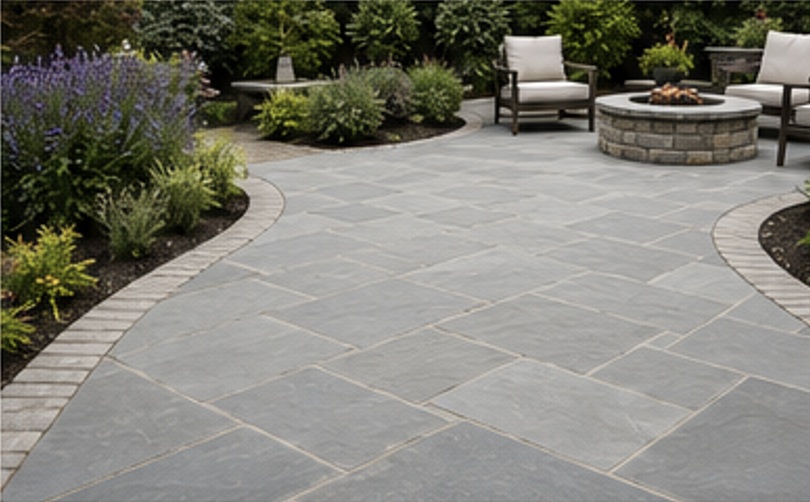
When installing a natural stone patio, most homeowners focus on selecting the perfect bluestone—its color, finish, and pattern. One important detail that’s often overlooked, however, is the width of the joints between each stone.
Proper joint spacing isn’t just about appearance. It plays a critical role in the strength, stability, drainage, and longevity of your patio. Whether you’re building a small backyard retreat or a large outdoor entertaining space, understanding the correct joint width will help ensure your project performs beautifully for decades.
In this guide, we’ll explain the ideal patio joint width, why it matters, and the factors that influence the spacing between bluestone pavers.
Quick Answer
The ideal patio joint width for most bluestone installations is 1/8″ to 1/4″. This spacing allows for natural movement, improves drainage, protects the stone edges, and creates a clean, professional-looking patio.
What Are Patio Joints?
Patio joints are the spaces left between each paver or slab during installation. These gaps are typically filled with polymeric sand, stone dust, or mortar, depending on the installation method.
The joints serve several important purposes:
- Allow natural expansion and contraction
- Improve drainage
- Help lock the pavers together
- Reduce edge chipping
- Create a balanced, professional appearance
Without proper spacing, even the highest-quality Pennsylvania bluestone installation can experience unnecessary stress and premature wear.
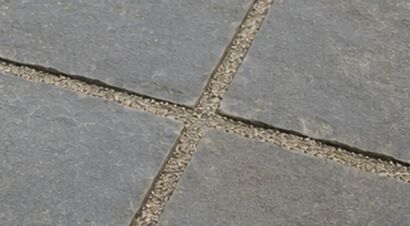
What Is the Recommended Joint Width?
For most Pennsylvania bluestone patio installations, the recommended joint width is:
1/8 inch to 1/4 inch
This range provides the ideal balance between appearance, durability, and structural performance.
While some installations may require slightly wider joints due to the natural variation in stone sizes, maintaining consistent spacing throughout the project is the key to achieving a professional result.
Why Joint Width Matters
Allows for Natural Movement
Natural stone expands and contracts slightly with seasonal temperature changes. Proper joint spacing provides room for this movement without placing excessive pressure on the edges of the stone.
Improves Drainage
Well-designed joints help water move through or away from the patio surface rather than collecting on top.
Proper drainage reduces standing water, minimizes erosion, and helps extend the life of the installation.
Protects the Edges of the Stone
Joints that are too narrow can cause adjacent stones to rub together over time.
This contact may eventually lead to chipped corners and damaged edges.
Creates a Balanced Appearance
Consistent joint spacing gives the finished patio a clean, intentional look.
Whether you’re installing a modern large-format patio or a traditional random ashlar pattern, evenly spaced joints enhance the overall design.
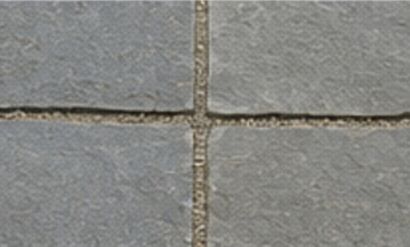
What Happens If the Joints Are Too Narrow?
Joints smaller than 1/8 inch can create several issues:
- Increased risk of chipped edges
- Limited room for expansion and contraction
- Difficulty filling joints properly
- Reduced drainage
- Uneven appearance
While very tight joints may initially look attractive, they often create problems over the life of the patio.
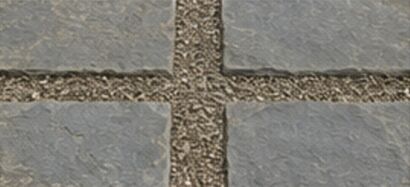
What Happens If the Joints Are Too Wide?
Joints larger than 1/4 inch may also create challenges.
Potential issues include:
- An uneven appearance
- More visible joint filler
- Increased weed growth
- Greater chance of sand erosion
- Reduced stability if not properly filled
For most residential patios, keeping joints within the recommended range produces the best long-term results.
Does the Type of Bluestone Matter?
Yes.
Different bluestone products may require slightly different spacing.
Thermal Bluestone
Precision-cut thermal bluestone has very consistent dimensions, allowing installers to maintain narrow, uniform joints.
Natural Cleft Bluestone
Natural cleft bluestone often includes slight variations in shape and size. Slightly wider joints may be necessary to maintain consistent alignment.
Patterned Bluestone
Random-pattern, sometimes called “irregular”, installations still benefit from consistent joint widths, even though the stone sizes vary.
What Should Patio Joints Be Filled With?
Several materials are commonly used depending on the installation method.
Polymeric Sand
Polymeric sand is the most popular choice for dry-laid patios.
Benefits include:
- Helps lock pavers together
- Discourages weed growth
- Reduces insect activity
- Resists erosion
Stone Dust
Commonly used beneath the pavers as a bedding layer and occasionally within joints for traditional installations.
Mortar
Wet-laid patios often use mortar joints for a permanent installation over a concrete base.
Tips for Consistent Joint Spacing
Professional installers achieve attractive, even joints by following a few simple practices.
- Begin with a square layout.
- Check alignment frequently.
- Use spacers or reference lines when needed.
- Avoid forcing stones tightly together.
- Make adjustments as you install rather than waiting until the end.
- Sweep joint material thoroughly into every gap.
Patience during installation produces a much better finished result.
Frequently Asked Questions
Should every patio joint be exactly the same width?
As close as possible. Small variations are normal with natural stone, but consistent spacing creates the strongest and most attractive installation.
Can joints be too tight?
Yes. Very narrow joints increase the likelihood of chipped stone edges and make it difficult to properly fill the joints.
Does larger bluestone require wider joints?
Not necessarily. The joint width depends more on the precision of the stone than its overall size.
Is polymeric sand recommended?
Yes. For most dry-laid bluestone patios, polymeric sand provides excellent stability while helping reduce weeds and erosion.
Do joint widths affect drainage?
Absolutely. Properly designed joints contribute to effective water management and help prevent pooling on the patio surface.
Build a Patio That Stands the Test of Time
Beautiful patios begin with quality materials—but long-term performance depends on proper installation. From selecting premium Pennsylvania bluestone to maintaining consistent joint spacing, every detail contributes to a finished patio that will remain beautiful for years to come.
At American Stone & Timber, we proudly supply premium Pennsylvania bluestone for patios, walkways, pool decks, and outdoor living spaces. Whether you’re a homeowner, contractor, or landscape professional, our team can help you choose the right products for your next project.
Contact us today to learn more about our selection of authentic Pennsylvania bluestone.