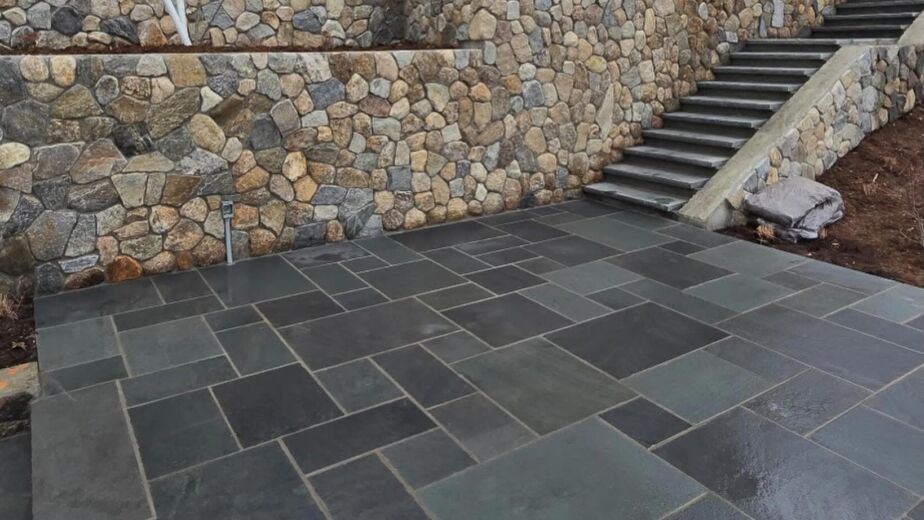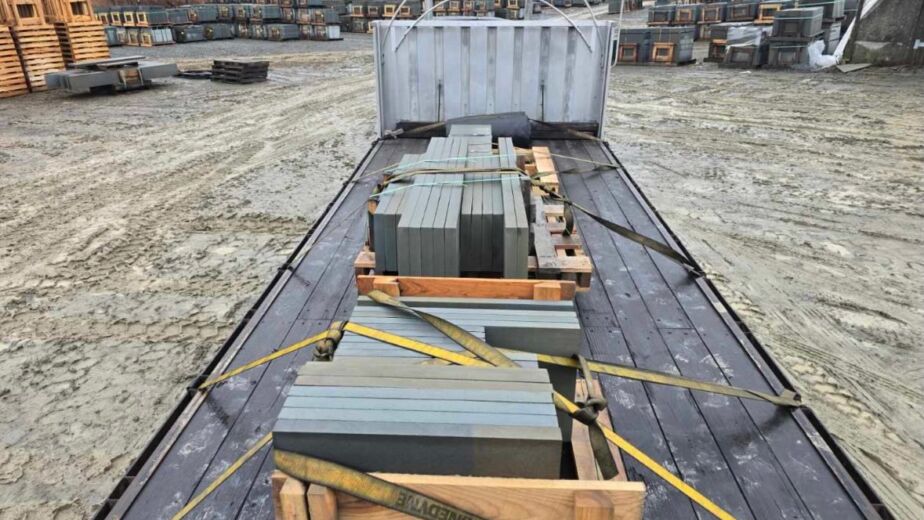
Pennsylvania bluestone is one of the most durable and beautiful natural stones available for patios, walkways, pool decks, steps, and outdoor living spaces. While it requires very little upkeep compared to many other paving materials, routine maintenance will help preserve its natural beauty for decades.
Fortunately, caring for bluestone doesn’t require expensive equipment or harsh chemicals. A few simple maintenance habits can keep your stone looking its best year after year.
In this guide, we’ll explain how to safely clean and maintain Pennsylvania bluestone without damaging its natural surface.
Quick Answer
To clean Pennsylvania bluestone, regularly sweep away debris, rinse with water, and use a pH-neutral stone cleaner when necessary. Avoid harsh acids, bleach, and pressure washers at high settings, as these can damage the stone or its joints. Routine maintenance helps preserve both the appearance and longevity of your bluestone.
Why Bluestone Is Easy to Maintain
One of the reasons Pennsylvania bluestone remains so popular is its durability.
When properly installed, bluestone naturally resists:
- Weathering
- Heavy foot traffic
- Freeze-thaw cycles
- UV exposure
- Everyday outdoor use
Routine maintenance is generally all that’s required to keep it looking beautiful.
Step 1: Sweep Regularly
The easiest maintenance task is also one of the most important.
Leaves, dirt, pine needles, and organic debris can trap moisture against the stone and eventually contribute to staining.
Use a broom or leaf blower to remove:
- Leaves
- Dirt
- Grass clippings
- Twigs
- Mulch
- Pine needles
Regular sweeping also helps prevent weeds from establishing in patio joints.
Step 2: Rinse with Water
For routine cleaning, plain water is often enough.
Use a garden hose with a spray nozzle to rinse away:
- Dust
- Surface dirt
- Pollen
- Light debris
This simple step keeps the stone looking fresh without requiring chemical cleaners.
Step 3: Use a pH-Neutral Stone Cleaner
For deeper cleaning, choose a pH-neutral cleaner specifically formulated for natural stone. A stone-safe cleaner can help remove dirt buildup, light stains, organic residue, and everyday grime without exposing the bluestone to harsh acids or abrasive chemicals.
Dilute and apply the cleaner according to the manufacturer’s directions. Before treating the entire surface, test it on a small, inconspicuous area and allow it to dry completely.
Work in manageable sections, and do not allow the cleaning solution to dry on the stone before rinsing.
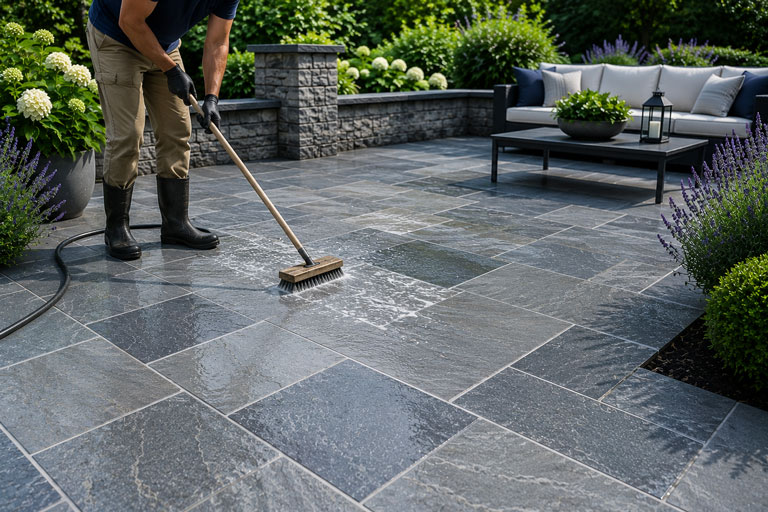
Step 4: Scrub Gently
Some stains may require light scrubbing.
Use:
- A soft-bristle brush
- A nylon deck brush
- Clean water
- Stone-safe cleaner
Avoid wire brushes, which can scratch the stone’s surface.
Step 5: Rinse Thoroughly
After cleaning, rinse the entire area with clean water.
Removing all cleaner residue helps prevent streaking and allows the stone’s natural color to shine through.
Keep Patio Joints Clean
The joints between bluestone pavers deserve attention as well.
Periodically inspect them for:
- Weed growth
- Erosion
- Missing joint material
- Moss buildup
If polymeric sand has washed away over time, replenish it according to the manufacturer’s recommendations.
Maintaining healthy joints helps preserve the stability of the entire installation.
Cleaning Common Bluestone Stains
Leaf Stains
Wet leaves can leave dark tannin stains on natural stone.
Remove leaves promptly and clean affected areas using a pH-neutral stone cleaner.
Grease and Food Spills
Outdoor kitchens and grills occasionally leave grease spots.
Clean spills as soon as possible using a stone-safe degreaser designed for natural stone.
Avoid harsh household cleaners.
Dirt and Mud
Allow heavy mud to dry before sweeping it away.
Then rinse and clean with water or a pH-neutral cleaner if needed.
Moss and Algae
Shaded, damp areas may occasionally develop moss or algae.
Use a natural stone cleaner formulated for biological growth and gently scrub the affected area.
Improving drainage and sunlight exposure can help prevent future growth.
Should You Pressure Wash Bluestone?
Pressure washing can be used carefully, but moderation is important.
If you choose to pressure wash:
- Use the lowest effective pressure.
- Keep the nozzle moving.
- Avoid concentrating on one area.
- Maintain a safe distance from the stone.
- Avoid blasting patio joints.
Excessive pressure can remove joint material or damage the surface over time.
For routine maintenance, a garden hose is often all that’s necessary.
What Should You Avoid?
Certain cleaning products can permanently damage natural stone.
Never use:
- Muriatic acid
- Vinegar
- Lemon juice
- Bleach*
- Harsh acidic cleaners
- Wire brushes
- Abrasive scouring powders
Acidic products may etch or discolor the stone and shorten its lifespan.
*The Natural Stone Institute recommends mild or diluted bleach for some outdoor algae, moss, and biological stains, with appropriate precautions.
Should You Seal Bluestone?
Pennsylvania bluestone does not require sealing, but many homeowners choose to apply a penetrating sealer for additional stain resistance.
Sealing may be especially beneficial for:
- Outdoor kitchens
- Dining patios
- Pool decks
- High-traffic entertaining areas
How Often Should Bluestone Be Resealed?
If your bluestone has been sealed, inspect it periodically to determine when another application may be needed. The lifespan of a sealer varies based on the product, weather exposure, foot traffic, and cleaning methods.
Many penetrating sealers last approximately 3–5 years, but bluestone should be resealed based on its condition rather than a fixed schedule. Follow the sealer manufacturer’s recommendations and reapply the product when water and stains are no longer being repelled effectively.
If you’d like to learn more, read our guide:
Seasonal Maintenance Tips
Spring
- Sweep winter debris
- Inspect joints
- Wash away accumulated dirt
- Check for frost movement
Summer
- Clean spills promptly
- Rinse pollen and dust
- Inspect outdoor kitchen areas
Fall
- Remove fallen leaves frequently
- Clean organic debris
- Prepare the patio for winter
Winter
- Avoid using harsh de-icing chemicals unless approved for natural stone.
- Use plastic snow shovels when possible.
- Remove snow before it becomes compacted.
Proper seasonal care helps preserve your investment year-round.
Frequently Asked Questions
Can I use vinegar to clean bluestone?
No. Vinegar is acidic and can damage natural stone. Always use a pH-neutral cleaner designed for stone surfaces.
Is pressure washing safe?
Yes, when done carefully using moderate pressure and proper technique. Avoid damaging the joints or concentrating high pressure in one location.
How often should I clean bluestone?
Most patios benefit from routine sweeping throughout the year and a more thorough cleaning once or twice annually.
Do I need to reseal bluestone?
Only if your installation has previously been sealed. Most penetrating sealers last approximately 3–5 years, depending on exposure and traffic.
What’s the best cleaner for bluestone?
A pH-neutral cleaner specifically formulated for natural stone provides the safest and most effective results.
Keep Your Bluestone Looking Beautiful for Years
Pennsylvania bluestone is designed to provide generations of beauty with only minimal maintenance. By following a simple cleaning routine and using products designed specifically for natural stone, you can preserve its color, texture, and durability for decades.
At American Stone & Timber, we proudly supply premium Pennsylvania bluestone for patios, walkways, pool decks, steps, and outdoor living spaces. Whether you’re selecting materials for a new project or caring for an existing installation, our knowledgeable team is here to help you get the most from your investment.
Contact us today to learn more about our premium Pennsylvania bluestone products and expert guidance for every stage of your project.